Assessment
During my initial and extended classrom practicums, I utilized a variety of assessment strategies, such as student feedback, observational notes, EQAO or test questions, rubrics, exit cards, and informal meetings with studens throughout the unit. During my practicums I was utilizing different assessment strategies to ensure I was including assessment of, for and as learning.
A strategy I used for assessment as learning was to complete frequent informal meetings with students to assess how they were learning during the unit and to get their opinion on how they were understanding the material being focused on and any challenges or difficulties they were expereincing and goals they should focus on for the remainder of the unit.
.








I used exit cards as assessemnt of learning to determine what students learned from the lesson or by completing a specific task or activity. In this case, I used these exit cards after asking two grade 4 students to complete a math activity.
Frquently I would give students feedback on their work as an assessment as and of learning strategy. Students are able to receive feedback to determine how they can improve. In this case, students were receiving feedback on how they can improve their persuasive writing.
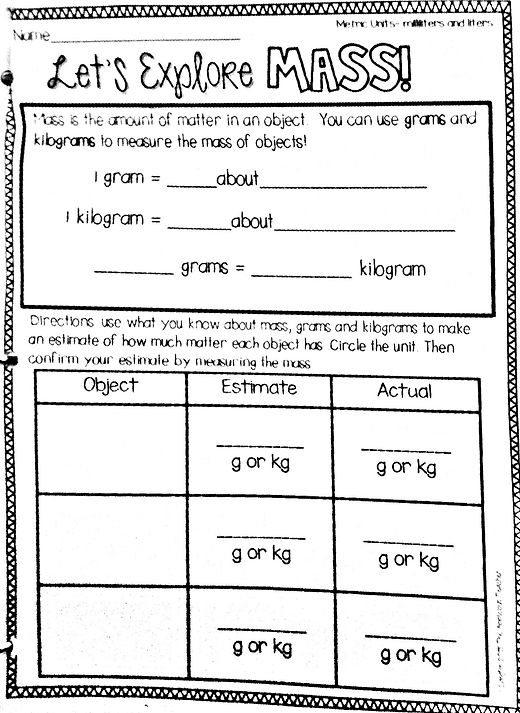
I used this "estimating mass" worksheet as an assessment for learning, to assess students' knowledge about mass to inform my teacing for the rest of the unit.
I used EQAO test questions on mass and capacity as an assessment of learning, to assess what students' learned throughout the unit and how they are acheiving the expectations focused on throughout the mass and capacity unit.
This was also assessment an assessment for learning because I was poviding students' with feedback in order to improve their work.
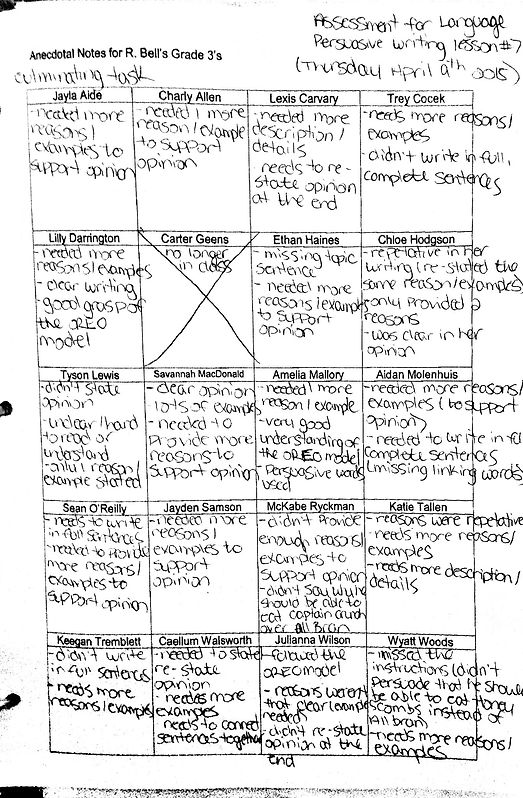
I used observational notes as assessment throughout all of my units and lessons. Observational notes allowed me to easily tack the progress of each student througout the unit. Observational notes were used as assessment of learning as well as assessment for learning.
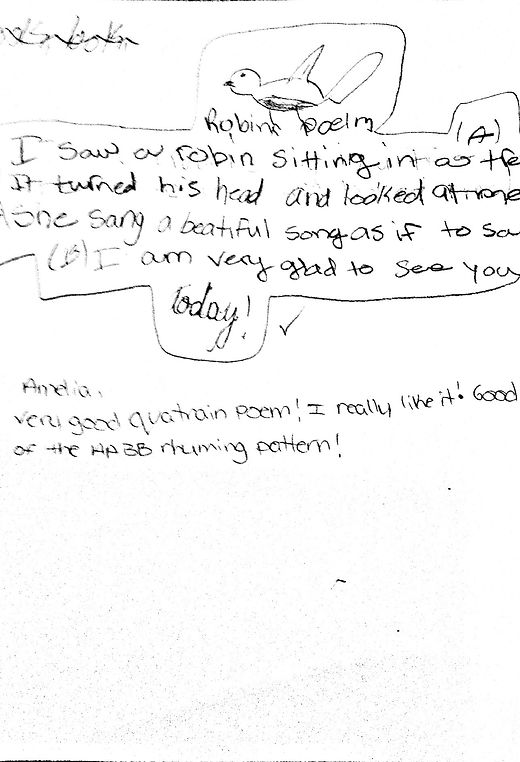
This is another example of assessment for learning as I am providing feedback to the student. This feedback was also combined with observational notes and became assessment of learning because I was able to recognize that the student understood quatrain poems.
More observational notes!
This rubric was used as an assessment of learning at the end of the a language unit on persuasive writing. The rubric was used to assess the student's ability to write a persuasive pararaph, and how they were acheiving the expectations focused on during the unit.
A Persuasive Writing Paragraph from a grade 3 Language unit
Through the process of developing this math task I demonstrated backwards design. The assessment portion of the task was very important in the development of the task. I collected data for this task and completed assessments of learning in a variety of ways, including:
-
Using exit cards at the end of the task
-
Documenting the students as they were completing the task (audio and video)
-
Taking pictures of students completing the task
-
Taking observational notes while students were performing the task
-
Creating a checklist and checking which expectations the students met while performing the math task